
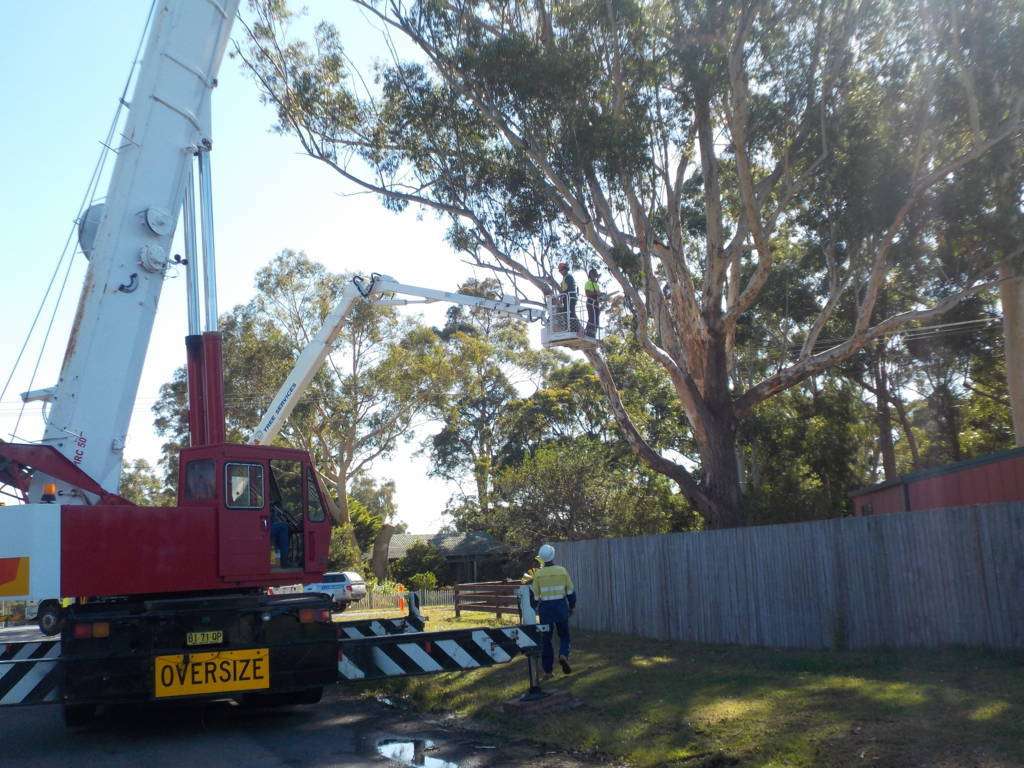
For owners and managers of commercial and rental properties, trees are an asset that needs managing like any other. Well-maintained trees provide shade, screening and street appeal. Neglected trees can mean blocked gutters, damaged roofs and fences, tenant complaints, interrupted trading and, in the worst cases, serious safety risks.
A planned approach is almost always simpler and more cost-effective than reacting after a limb has fallen. Here is how to build tree care into the way you manage a property.
Who is responsible for trees on a rental property?
In NSW, landlords must provide and maintain residential premises in a reasonable state of repair. NSW Fair Trading guidance on rental property maintenance responsibilities lists routine garden maintenance such as watering, mowing and weeding as tenant responsibilities. Larger tree work, such as pruning, lopping or removal that needs specialist equipment or an arborist, generally falls outside routine gardening. The exact split can depend on the tenancy agreement, so property managers should check the lease and keep written records of requests and approvals.
Serious storm damage is listed among the examples of urgent repairs in NSW Fair Trading guidance, so it makes sense to have a reliable tree contractor lined up before you need one.
For commercial premises, responsibilities are usually set out in the lease. Clarify who manages trees, who approves the work and who pays before an issue comes up.
Common tree issues on managed properties
- Branches over roofs and gutters, which add leaf litter and raise the risk of damage in storms.
- Low limbs over car parks, driveways and footpaths that affect vehicles, signage and pedestrians.
- Trees growing towards service lines or other infrastructure.
- Root activity near paths, paving or fences, creating trip hazards or damage.
- Overgrown fence lines and boundaries that cause disputes with neighbours.
- Dead or declining trees that have not been inspected for years.
- Leftover stumps from past removals.
Build a simple tree maintenance plan
A tree maintenance plan does not need to be complicated. For most properties, it covers four things.
1. Know what you have
List the significant trees on each property, with a photo, their approximate location and any known issues. For larger sites, a site plan with each tree marked is helpful.
2. Schedule regular inspections
A regular inspection schedule helps catch problems early. Include a check before storm season and after major weather events. High-traffic sites, older trees or trees close to buildings may need more frequent checks than a quiet residential yard.
3. Prioritise the work
Separate urgent safety issues from routine maintenance, such as pruning for clearance, and from longer-term improvements. This makes it easier to budget across a financial year and justify the work to owners or committees.
4. Keep records
Record inspections, quotes, approvals, work completed and photos. Good records help with owner reporting and insurance claims, and show that issues were taken seriously.
Be ready before something urgent happens
Having a tree contractor already on your books makes urgent work faster if a storm brings down a limb, and it reduces the scramble to find a crew when everyone else is calling at the same time. Property managers who already have a preferred contractor, access arrangements and owner approval pathways in place can respond more quickly, and will have a clearer paper trail if a tenant, committee or insurer later asks what was done.
Approvals still apply
Being a commercial or investment property does not change the tree rules. In the Shoalhaven, pruning or removal on non-rural land is covered by DCP 2014 Chapter G4 – Tree and Vegetation Management. Council’s Trees on private land page explains when a permit is needed, how to apply through the NSW Planning Portal, and that an Owners Consent form forms part of the application. That last point matters for property managers and tenants: the owner’s consent is required.
Council publishes its fees each year, and Chapter G4 sets out the assessment process, including notification requirements for larger applications. Allow time for this in your planning. If the property is in the Illawarra or Southern Highlands, check that council’s requirements instead.
Safety on occupied sites
Tree work on an operating business, shopping centre, strata complex or tenanted home means managing the public as well as the crew. The SafeWork NSW Code of practice – Tree works sets out how tree work risks should be managed, including exclusion zones, drop zones and safe lowering of branches.
From a manager’s point of view, good planning includes:
- giving tenants and occupants notice of the date, time and areas affected
- arranging for car parks, entries or paths to be cleared or closed where needed
- scheduling noisy work at times that minimise disruption to trading or residents
- confirming access, keys and parking for equipment before the day.
Trees and powerlines
If a property has private poles or overhead service lines, Endeavour Energy advises that the owner is responsible for keeping trees a safe distance from private powerlines, and that the network may require work to be done if clearances are compromised. Work near powerlines must be done by appropriately qualified and authorised people. A&D provides vegetation management near power lines.
How A&D can help
A&D Tree Services works with residential, commercial and government clients. Services relevant to managed properties include:
- tree trimming, crown thinning and crown lifting for clearance and health
- removal of dead or unsafe trees, with approvals in place
- stump grinding after removals
- fence-line clearing and hedge, creeper and ivy work
- vegetation management near power lines
- 24/7 emergency disaster response after storms.
See our commercial tree services in the Shoalhaven and residential tree services for more detail.
Talk to us about your properties
Whether you manage one rental, a strata complex or a portfolio of commercial sites across the Shoalhaven, Illawarra or Southern Highlands, A&D can quote for individual jobs or help you plan ongoing maintenance.
Request a free quote online or call (02) 4423 6555.
This article is general information only and is not legal advice. Tenancy and lease obligations vary, so check your agreement and the linked official sources.