
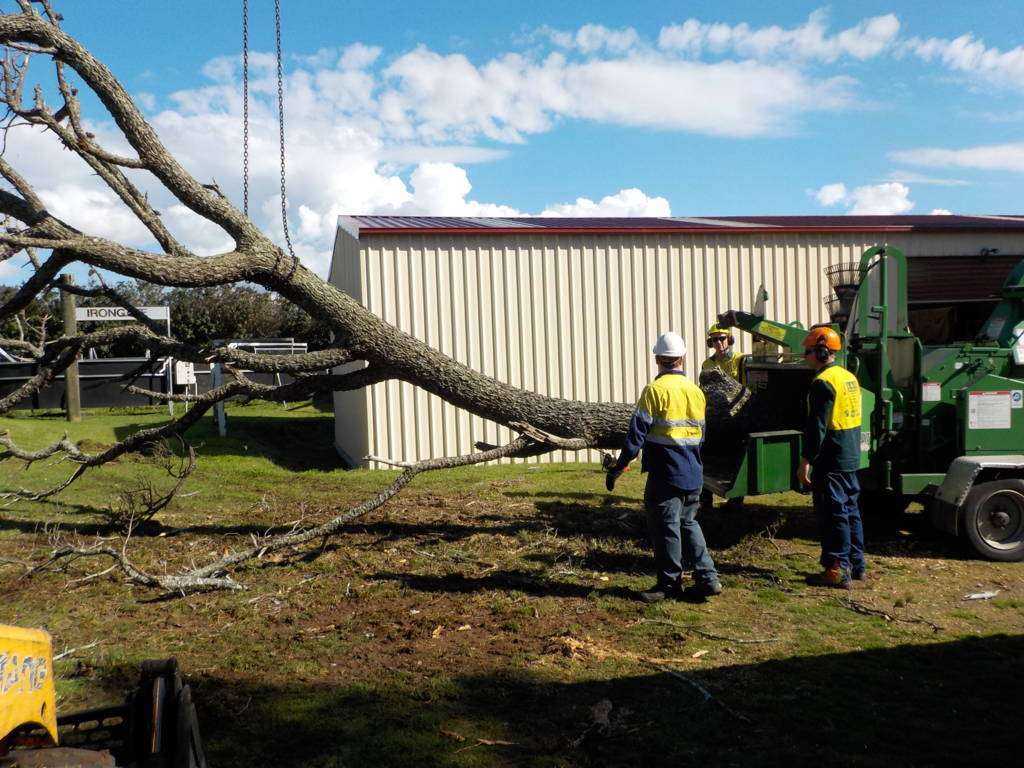
Storms are part of life on the South Coast. In NSW, storm season typically falls between September and April, although a major storm can happen at any time of the year. Strong winds, heavy rain and saturated ground can turn a tree that has stood quietly for decades into a real risk to your home, shed, fences, vehicles or the people who use your property. The good news is that a lot of storm damage starts with problems you can spot well before the weather turns.
This guide walks through what to look for in your trees and yard ahead of storm season, which work needs approval in the Shoalhaven, and how to get help if a tree does come down.
Why trees fail in storms
Trees rarely fail for no reason. Common contributing factors include:
- Dead or dying limbs that have lost their strength and flexibility.
- Root damage, often from digging, trenching or building work close to the trunk.
- Waterlogged soil, which reduces the grip roots have on the ground during prolonged rain.
- Heavy, overextended limbs reaching over roofs, driveways or powerlines.
- Dense crowns that catch more wind.
- Cracks, splits, fungal growth or cavities in the trunk or major branches.
None of these automatically means a tree has to go. Often the right pruning, crown thinning or removal of a single limb is enough to reduce the risk.
A pre-storm walk-around
Before storm season, take 20 minutes to walk your property and look up. Things worth noting:
- Branches hanging over the roof, gutters, carport, pool or neighbour’s fence.
- Dead wood in the canopy, especially large limbs that have dropped leaves or bark.
- A tree that has started to lean, or soil cracking or lifting around its base.
- Mushrooms or fungal brackets at the base or on the trunk.
- Branches close to the service line running to your house.
- Trees that have lost limbs in previous storms.
Take photos so you can show an arborist exactly what you are worried about. If something looks dangerous, keep people and vehicles clear and get professional advice rather than tackling it yourself.
Follow official storm preparation advice
The NSW SES storm preparation guidance recommends getting ready before storm season by:
- fixing roof damage, including broken or missing tiles and leaks
- cleaning gutters, downpipes and drains
- trimming trees and branches that could fall on your home or property
- making sure your insurance is current
- securing or putting away items that could blow around in strong winds.
In the Shoalhaven, check with Council about guidelines or consent before you trim or remove a tree, as set out below. A professional inspection before storm season is a practical way to identify work that should be done early, rather than waiting until a warning is issued.
Check whether you need Council approval
In the Shoalhaven, pruning or removing trees on private land is governed by Chapter G4 – Tree and Vegetation Management of the Shoalhaven DCP 2014, which applies to non-rural land (zones other than RU1–RU4). Shoalhaven City Council’s Trees on private land page explains the main pathways, including:
- a Tree Removal Permit lodged through the NSW Planning Portal
- the Gordon Timbs 45 Degree Rule exemption, which can allow removal within a 45-degree angle of an approved building, consistent with the DCP
- exemptions for trees under 5 metres and for certain listed exempt species
- the NSW RFS 10/50 vegetation clearing rules, where they apply
- Local Land Services approval pathways for rural-zoned land.
Council also states that a tree posing an imminent threat to human life or significant property can be removed immediately without Council approval. The rules have conditions, so check the current DCP, or call Council’s Environmental Services team on 1300 293 111, before relying on any exemption. Council encourages trimming over removal wherever that is appropriate.
If you are considering the 10/50 vegetation clearing rules, use the RFS online tool to confirm your property is in a 10/50 entitlement area first. The RFS advises checking the tool on the day you clear, because entitlement areas and restrictions can change.
Trees near powerlines
Never prune near powerlines yourself. Endeavour Energy advises keeping a three-metre safety clearance from powerlines and notes that owners are responsible for keeping trees on their property clear of private powerlines. Work near the network needs appropriately qualified and authorised people. A&D Tree Services provides vegetation management near power lines.
Work that can reduce storm risk
Depending on what an inspection finds, A&D can help with:
- Tree trimming to remove dead, damaged or overextended limbs. As our residential tree services page explains, well-trimmed trees tend to move less in strong winds.
- Crown thinning to let air move more freely through the canopy.
- Crown lifting to remove low limbs and create clearance from buildings, driveways and paths.
- Tree removal where a tree is dead or unsafe and the necessary approvals are in place. See tree removals in the Shoalhaven.
- Stump grinding and clean-up once a tree has been removed.
Leaving it until a storm warning is issued usually means competing with everyone else for the same crews, so early planning is worth it.
Larger properties, businesses and rural blocks
Storm preparation looks different on a commercial site, acreage or rural property. Fallen timber can block access roads, damage fences and stock areas, or cut off power to pumps and sheds. Fence-line clearing, fire breaks and vegetation management near infrastructure are all part of A&D’s commercial tree services. If you manage several sites, a regular inspection schedule makes it far easier to stay on top of risks.
During and after a storm
During a storm, the SES advises sheltering inside away from windows and staying away from trees, powerlines, creeks and low-lying areas. NSW SES electricity safety advice is to always assume fallen powerlines are live: stay at least 8 metres (about two car lengths) away, and do not try to move trees or branches that have fallen across them.
- If anyone is trapped or injured, call Triple Zero (000).
- For emergency help with a storm, such as a tree that has fallen on your home or is blocking access, call NSW SES on 132 500. The NSW SES contact page explains when to call.
- Report fallen powerlines to your electricity network. In the Shoalhaven, Illawarra and Southern Highlands, that is Endeavour Energy on 13 10 03.
- Contact your insurer as soon as possible if your property has been damaged.
SES volunteers undertake temporary emergency measures to make a situation safe. For permanent repairs and to remove remaining debris, you will usually need to contact your insurer or a private contractor. A&D Tree Services offers 24/7 emergency disaster response and has experience mobilising staff and equipment to clean up after severe weather across the Shoalhaven. For urgent after-hours assistance, call 0432 504 005.
Book a pre-storm check with A&D
A&D Tree Services is a family-owned business based in South Nowra, providing residential, commercial and government tree services across the Shoalhaven, Illawarra and Southern Highlands. If there is a tree on your property you are unsure about, talk to us before storm season, not after.
Request a free quote online or call (02) 4423 6555.
This article is general information only. Council rules, exemptions and emergency advice can change, so check the linked official sources for the current requirements that apply to your property.